
McLeod County, MN — August 24, 2025, Wade Halvorson was killed and a child was injured in a truck accident at about 8 a.m. on U.S. Route 212.
Authorities said an eastbound 2014 Peterbilt semi-truck collided with a westbound 2018 Honda Civic near Targus Avenue.
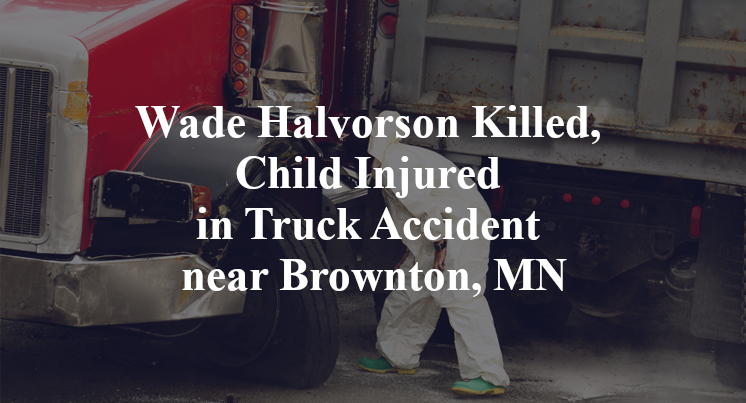
Honda driver Wade Kenneth Halvorson, 60, of Waconia died at the scene of the crash west of Brownton, according to authorities.
A 5-year-old girl who had been riding in the truck was hospitalized with non-life-threatening injuries, authorities said, but the driver and two other passengers, including a 7-year-old boy, were not hurt.
Authorities have not released any additional information about the McLeod County crash at this time.
Commentary by Attorney Michael Grossman
When people read about a head-on collision involving an 18-wheeler and a passenger vehicle, their first reaction is often: “How does something like this happen?” That’s exactly the right question. Based on reports, a semi-truck and a car collided on U.S. Route 212 just west of Brownton. What’s not clear yet is why.
Authorities haven’t said much beyond confirming that the vehicles were traveling in opposite directions. That leaves one glaring question unanswered: Which vehicle crossed into the other’s lane? If it was the truck, then it’s essential to ask why. Was the driver distracted? Was he fatigued? Did a mechanical issue cause him to lose control? On the other hand, if the smaller vehicle crossed over, that raises an entirely different set of concerns. Right now, there’s no public information to confirm either scenario.
This is where evidence becomes crucial. Most modern 18-wheelers are equipped with engine control modules (ECMs), basically a truck’s black box. That data can tell us the truck’s speed, braking, steering and gear shifts right before the crash. Dash cameras, both forward- and driver-facing, can help determine whether the trucker was paying attention or if another vehicle entered his path unexpectedly. Cell phone records can confirm whether the driver was distracted by a call or text.
Beyond that, an effective investigation would also examine the trucking company’s role. Was this driver properly trained? Had he been screened before being hired? I’ve handled cases where a crash was caused not just by poor driving, but by hiring decisions that never should’ve been made. In one case, a company hired a driver who’d been fired multiple times and then claimed he was fully qualified after a quick 20-minute test. That’s not just negligence; that’s a company choosing to ignore reality.
As for the child in the truck, we’re told she was injured but survived. We’re also told the driver and other passengers weren’t hurt. But again, we don’t know how or why this crash unfolded the way it did. Was the truck already in the wrong lane? Was it trying to pass? Was there a medical emergency? Right now, all of that remains to be seen.
The truth is, most fatal truck accidents don’t get resolved by reading headlines or press releases. They get resolved by gathering hard evidence; by pulling data, interviewing witnesses and reconstructing the crash from the ground up. Only then can we begin to hold the right people accountable.
Key Takeaways:
- The central unanswered question is which vehicle crossed into the oncoming lane and why.
- ECM data, dash cams and cell phone records are critical tools in understanding the truck driver’s actions.
- Proper driver vetting and company hiring practices can be just as relevant as driver behavior.
- A full investigation is needed before anyone can say who is at fault.
- Accountability depends on the evidence, not assumptions.

 call us
  Email Us
  Text us