
Paxton, IL — August 13, 2025, one person was injured in a truck accident at about 4 a.m. on northbound Interstate 57 near mile marker 261.
Authorities said a semi-truck dislodged about 60 feet of guardrail after overturning and hitting the barrier.
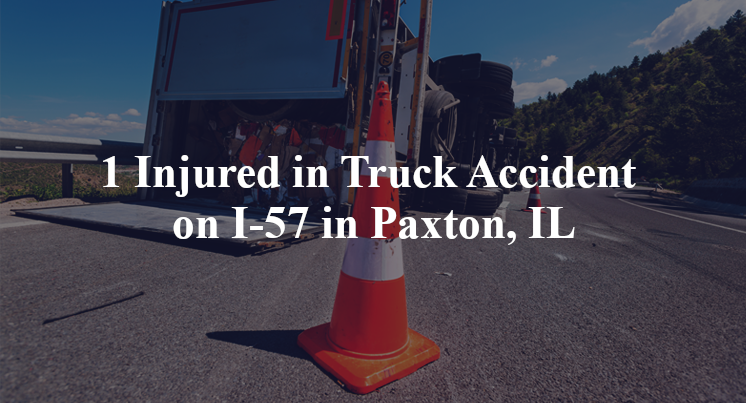
An oncoming Subaru Outback and another semi-truck collided with the debris caused by the first truck’s crash, according to authorities.
The driver of the second truck was hospitalized with unspecified injuries, authorities said.
No other injuries were reported.
Authorities have not released any additional information about the Ford County crash at this time.
Commentary by Attorney Michael Grossman
When people read about a crash where a semi-truck overturns and ends up sending debris into the path of oncoming vehicles, the question that jumps out is: How did the first truck lose control in the first place? That’s the critical issue here. Until we understand what caused that initial rollover — whether it was driver error, mechanical failure, improperly loaded cargo or something else — we’re working with only a piece of the full picture.
From what’s been reported, the overturned truck dislodged 60 feet of guardrail. That tells us the impact was substantial. It also raises several unanswered questions: Was the truck speeding? Was the driver fatigued after a long haul? Was he distracted, possibly using a cell phone or reaching for something in the cab? Or was there an external factor like a blown tire or sudden obstacle?
Depending on whether the truck was already out of control before hitting the barrier or tipped during evasive action, different legal questions arise. Either way, we’re not just dealing with one crash here. Once the guardrail was destroyed, debris spilled into the northbound lanes, leading a second truck and a Subaru to collide with it. At least one person was hospitalized.
That sequence suggests a domino effect, where one bad event causes a chain of others. But the root of it all still goes back to the first truck’s loss of control. Investigators need to focus on the facts that can explain how and why that happened. That includes data from the truck’s engine control module (the black box), dash cam footage if available, and the driver’s background, including hours of service, drug testing history and any past incidents on the road.
In one case I handled, a truck driver caused a wreck after being hired without any meaningful skill evaluation. The company gave her a 20-minute road test and decided that was enough. After that crash, it became clear the driver should never have been on the road, but the larger failure was the company’s decision to hire her in the first place.
If this current case involves poor maintenance, improper hiring or weak cargo restraints, that won’t come out unless someone asks the right questions and demands to see the relevant evidence. These aren’t just academic concerns; they’re key to ensuring accountability.
Key Takeaways:
- The cause of the initial truck rollover is unknown and critical to understanding who may be responsible.
- The crash caused a chain reaction, injuring at least one other truck driver; that highlights the broader impact of one vehicle’s failure.
- Black box data, dash cam footage and driver records are essential tools to reconstruct what happened.
- The role of the trucking company — particularly in how it trained, supervised or screened the driver — should not be overlooked.
- A thorough investigation must focus on the facts, not assumptions, to ensure the right parties are held accountable.

 call us
  Email Us
  Text us