
Omaha, NE — July 19, 2025, four people were injured in a truck accident at about 5:30 p.m. on westbound Interstate 80.
Authorities said a Toyota SUV stopped after hitting something in the road near the 24th Street bridge, then it was hit by a Volvo semi-truck. The truck, which was loaded with cardboard boxes, caught fire after the crash, blocking the exit ramp.
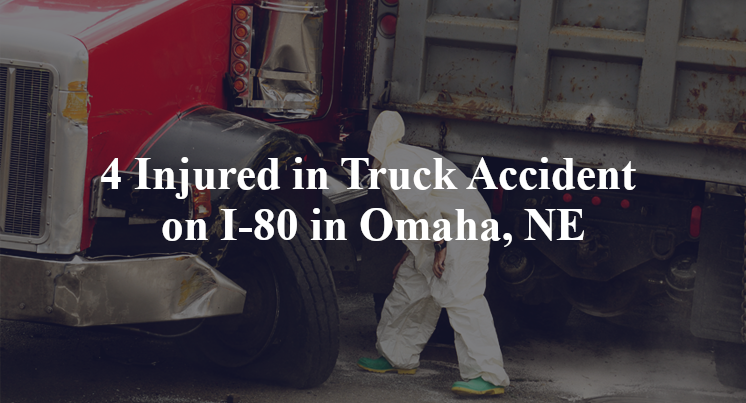
Four people who were in the SUV were hospitalized with unspecified injuries after the crash, according to authorities.
The truck driver was not hurt, authorities said.
Authorities have not released any additional information about the I-80 crash at this time. The accident is still under investigation.
Commentary by Attorney Michael Grossman
When a truck slams into a stopped vehicle on the highway, people naturally want to know: Why didn’t the truck stop in time? Was the SUV in a dangerous position? Who, if anyone, dropped something in the road to begin with?
From what’s been reported, an SUV came to a stop on westbound I-80 in Omaha after striking an unknown object in the roadway. While it was stopped, a loaded 18-wheeler rear-ended it, injuring four people. Beyond those basic facts, almost everything else remains unclear.
That lack of clarity is a problem, because depending on whether the truck driver had a clear view, enough following distance or a reasonable chance to avoid the SUV, responsibility could shift dramatically. Without dash cam footage or black box data showing the truck’s speed and braking, it’s too early to say whether the driver did anything wrong. But it’s just as possible that a failure to maintain proper distance or inattention played a major role.
Then there’s the question of what caused the SUV to stop in the first place. “Something in the road” is vague. Was it debris from another vehicle? Cargo that fell off a different truck? If the hazard was preventable and someone else’s negligence put that object in the road, that could become the starting point of a much broader investigation. In past cases I’ve handled, it’s turned out that improperly secured cargo shifted or fell, leading to chain-reaction crashes. The person or company who created that hazard didn’t always stick around, but with the right investigative tools, we found out who they were.
We also can’t overlook the role of trucking company practices. If the truck driver wasn’t trained to anticipate stopped vehicles or wasn’t fit for duty, that raises serious questions about hiring and supervision. In a case I handled, we found out the driver had been fired from multiple jobs, but the company hired her anyway after a flimsy 20-minute road test. In the end, it wasn’t just the driver who was held accountable; it was the entire system that enabled her to be behind the wheel in the first place.
Crashes like this don’t happen in a vacuum. The truth is often buried in the details: phone records, camera footage, maintenance logs and the decisions made long before the truck ever hit the road. Whether this was a case of driver error, dangerous cargo conditions or a combination of factors remains to be seen. But if there’s going to be accountability, someone has to pull those threads.
Key Takeaways:
- It’s not yet clear why the SUV stopped or whether the truck driver had enough time to react.
- Black box and dash cam data could reveal whether the trucker was following too closely or distracted.
- If road debris caused the SUV to stop, the source of that debris may be legally significant.
- Trucking company hiring and training policies may come under scrutiny depending on what the evidence shows.
- Full accountability requires gathering all the facts: not just who was driving, but how every decision contributed to the crash.

 call us
  Email Us
  Text us