
Cajon Pass, CA — November 8, 2025, four people were injured due to a truck accident at approximately 2:30 a.m. along Interstate Highway 15.
According to authorities, several people were traveling in a northbound passenger vehicle on I-15 in the vicinity a couple of miles south of Oak Hill Road when the accident took place.
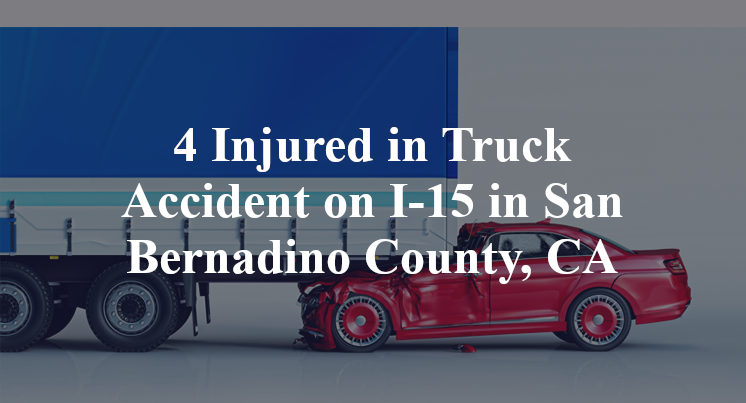
Details surrounding the accident remain scarce. Officials indicate that, for as yet unknown reasons, a collision occurred between the front-end of the passenger vehicle and the rear-end of an 18-wheeler. The passenger vehicle apparently caught on fire after the initial collision.
The person who had been behind the wheel of the vehicle reportedly suffered serious injuries over the course of the accident; three other people who had also been in the passenger car sustained injuries of unknown severity, as well. All four victims were transported to local medical facilities by EMS in order to receive necessary treatment. Additional information pertaining to this incident—including the identities of the victims—is not available at this point in time. The investigation is currently ongoing.
Commentary by Attorney Michael Grossman
When a smaller vehicle strikes the rear of an 18-wheeler, many people are quick to assume it was the car’s fault—someone not paying attention, maybe following too closely. But that’s not always the whole story, especially when the crash happens at 2:30 in the morning and ends with the passenger vehicle catching fire. The real question is whether the truck was where it was supposed to be and whether it was properly visible to approaching traffic.
Rear-end collisions involving large trucks can be especially dangerous because of how those trailers are built. They sit high off the ground, which means a lower vehicle can slide partially underneath on impact—a situation known as an underride. That kind of collision can easily lead to catastrophic damage or, as may have happened here, spark a fire. Federal law requires trucks to have functioning rear underride guards, reflectors, and lights to reduce that risk. Investigators will need to determine whether those features were present and in proper working order.
Another issue is whether the truck was moving, stopped, or slowing down. If the truck had recently pulled into traffic from the shoulder, was making a slow climb through the pass, or had come to a near stop for some reason, the driver behind may not have had adequate warning—especially in low-visibility conditions. That’s why it’s essential to recover ECM data, lighting inspection records, and, if available, dash cam footage from both vehicles.
It’s also worth asking whether fatigue or distraction may have played a role on either side. In the early hours of the morning, driver alertness is often compromised. If the trucker was stopped or moving slowly without proper lights, that may have contributed. If the car’s driver wasn’t fully alert, that’s another factor to consider. But again, these aren’t conclusions anyone can jump to—only a careful review of the evidence can say who acted reasonably and who didn’t.
Key Takeaways:
- Rear-end crashes with 18-wheelers require investigation into the truck’s speed, visibility, and equipment condition.
- Underride collisions are often survivable only if the trailer has proper guards and reflectors in working order.
- Low lighting and early-morning hours raise questions about driver visibility, awareness, and fatigue.
- Fault cannot be presumed based on vehicle position alone; both drivers’ actions must be examined using physical and electronic evidence.

 call us
  Email Us
  Text us