
Nashville, TN — May 3, 2025, a teen was killed following a truck accident at approximately 10:30 p.m. along Interstate Highway 40.
According to authorities, a 17-year-old boy was traveling in a westbound Ford Fusion on I.H. 40 in the vicinity of Spence Lane when the accident took place.
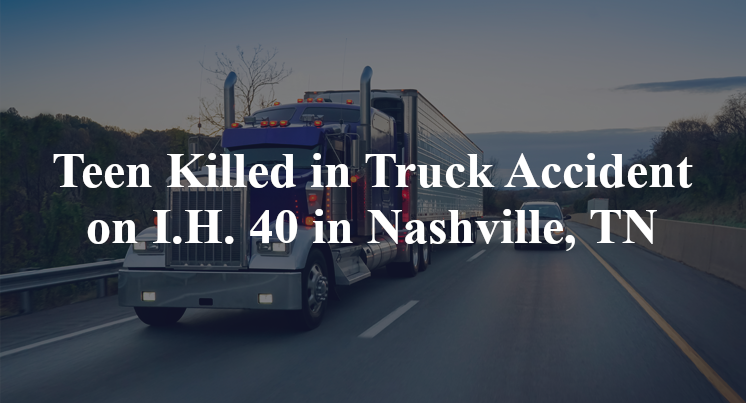
Officials indicate that, for as yet unknown reasons, the Fusion was involved in a collision with the rear-end of an 18-wheeler. A third westbound vehicle was reportedly involved in the accident, as well. The teen suffered fatal injuries due to the wreck and was declared deceased at the scene, according to reports. Additional details pertaining to this incident are not available at this point in time. The investigation is currently ongoing.
Commentary by Attorney Michael Grossman
When I hear about a collision where a small car rear-ends an 18-wheeler at night, especially one that ends in a fatality, I don’t assume the driver in the smaller vehicle was at fault. What I do think is that something may have gone very wrong long before impact. These crashes raise specific questions about the visibility of the truck, the behavior of other drivers on the road, and whether every vehicle involved was where it was supposed to be and operating the way it should have been.
One of the most important details in any rear-end collision with a commercial truck is whether the trailer was visible. At 10:30 p.m., visibility is already compromised, and a trailer without working lights or proper reflective markings can become nearly invisible—especially to a young driver who might not have years of experience reacting to unexpected obstacles in dark conditions. I’ve seen cases where trailers were parked in active lanes, or brake lights weren’t functioning, and the approaching driver had no real warning before it was too late.
It’s also necessary to consider whether the truck was stopped or just moving slowly in an active lane. If a truck is crawling along the highway below a reasonable speed and doesn’t have its hazard lights on, other drivers may not realize the danger until it’s too late. There are regulations for a reason—trucks are required to maintain safe speeds and use visibility aids so other drivers can safely respond to their presence.
Then there’s the involvement of a third vehicle. What role did that driver play? Were they following too closely? Did they react in time to what was unfolding in front of them? In multi-vehicle crashes, liability doesn’t always rest with the person in the back. The sequence of events—and the actions of every driver involved—have to be examined in full before anyone can say what really caused the wreck.
Getting to the bottom of a crash like this means asking the right questions and refusing to stop at surface-level explanations. Serious wrecks deserve serious investigation, not assumptions. Understanding how visible the truck was, how it was moving, and how all drivers reacted is crucial for those seeking to understand what really happened. Getting clear answers to these questions is the least that can be done to help those affected find the clarity and closure they deserve.

 call us
  Email Us
  Text us