
Waller County, TX — September 30, 2025, a driver was injured in a truck accident at about 11:30 p.m. on U.S. Route 290 west of Hempstead.
A preliminary accident report indicates that a 2020 Freightliner semi-truck was heading west when it went off the road and crashed into a fence near Rustic Lane.
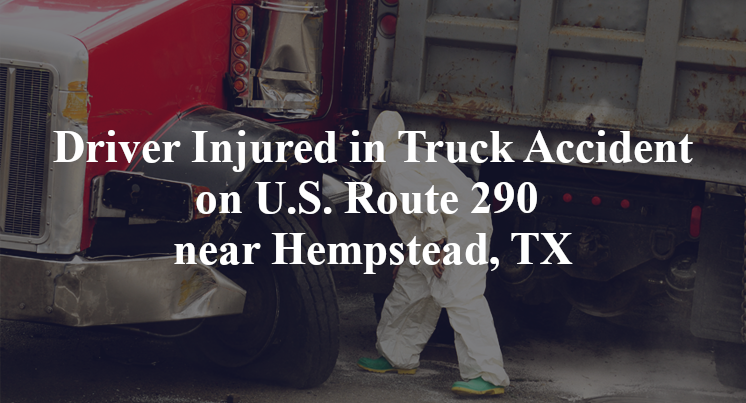
The driver, a 54-year-old man, was seriously injured in the crash, according to the report. His name has not been made public yet.
Authorities have not released any additional information about the Waller County crash at this time.
Commentary by Attorney Michael Grossman
When people hear that a semi-truck ran off the road in the middle of the night and seriously injured its driver, the first reaction is often to assume it was just a one-off mistake. But from experience, I can say that crashes like this rarely come down to just one factor. The real question is: why did the truck leave the roadway?
At this point, there’s little public information about what caused the crash, only that the truck left the highway and hit a fence near Rustic Lane. That leaves some critical questions unanswered. Was the driver distracted or fatigued? Did the truck have a mechanical failure? Was there a sudden medical emergency? These aren’t academic hypotheticals. They’re the kinds of details that determine whether the crash was truly unavoidable or the result of preventable errors.
To get those answers, someone will need to look at the truck’s onboard systems. Most modern 18-wheelers are equipped with an engine control module, often called a “black box,” that records speed, braking and throttle data leading up to a crash. Some trucks also have in-cab cameras that may show what the driver was doing at the time: whether he was alert, distracted or possibly dealing with a health issue.
Phone records can also play a role. I’ve seen cases where a driver’s call logs or texts revealed that distraction was a key factor. But no one can know for sure unless that evidence is preserved and reviewed.
It’s also important to consider the trucking company’s role. Depending on the cause, this crash may raise broader questions about hiring and oversight. Was the driver well-trained and medically cleared to drive? Had there been prior incidents or warning signs? I handled a case where a driver had been let go from several companies before finally being hired by one that did a laughably poor job of vetting her. That company’s hiring shortcuts were a major reason the crash happened. The same could be true here, but we can’t know until someone pulls back the curtain and investigates.
Ultimately, the goal isn’t just to assign blame. It’s to understand exactly what happened so that accountability rests with those who truly bear responsibility. That only happens when the full scope of evidence is brought into the light.
Key Takeaways:
- The cause of the crash is unknown; key questions remain about why the truck left the roadway.
- Vital evidence includes ECM data, in-cab video and phone records, all of which should be preserved.
- A thorough investigation may reveal whether company policies, driver fatigue or other preventable issues played a role.
- Responsibility shouldn’t be assumed. It should be determined through careful evidence review.
- Understanding the full story is essential to holding the right parties accountable.

 call us
  Email Us
  Text us