
Bethlehem, PA — July 21, 2025, at least one person was injured due to a multi-vehicle truck accident shortly before 12:30 p.m. along U.S. Highway 22.
According to authorities, the accident took place in the eastbound lanes of U.S. Highway 22 in the vicinity of Airport Road.
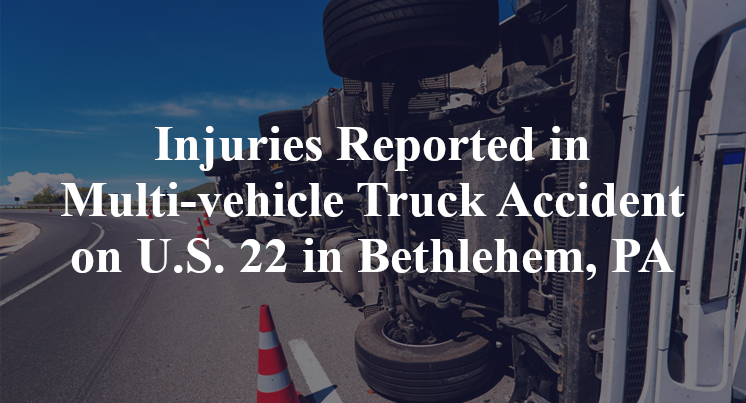
Details surrounding the accident remain scarce. Officials indicate that, for as yet unknown reasons, a collision took place between four separate vehicles, one of which was apparently a box truck. Preliminary reports state that the box truck overturned over the course of the accident, coming to a stop resting on its side.
There have been reports of injuries due to the wreck, though the number of victims injured and the extent of their injuries have not been clarified. Additional information pertaining to this incident—including the identity(s) of the victim(s)—is not available at this point in time. The investigation is currently ongoing.
Commentary by Attorney Michael Grossman
When a box truck overturns in a multi-vehicle crash on a major route like U.S. 22, the most important question is: What triggered the rollover, and could it have been prevented? Box trucks aren’t designed to tip easily, even in collisions, so when one ends up on its side, it usually signals something about speed, maneuvering, or vehicle stability went wrong.
Right now, it’s unclear whether the box truck was the vehicle that initiated the crash or was caught in it after someone else’s mistake. That distinction is crucial. If the box truck driver made a sudden lane change, swerved, or braked too hard, the rollover could be the result of driver misjudgment. If another vehicle cut the truck off or forced a reaction, then fault may lie elsewhere—but that doesn’t change the need to understand how the truck responded under pressure.
Over the years, I’ve seen rollovers tied to improperly secured cargo or overloaded vehicles. A load that shifts suddenly—even by just a few inches—can throw a box truck off balance and make it almost impossible to stay upright in a sharp maneuver. That’s why investigators will likely examine loading records, tie-down methods, and whether the truck was operating within legal weight limits.
In these types of crashes, liability isn’t always about one dramatic mistake—it’s often about smaller oversights that add up: poor load distribution, rushed decisions in traffic, or a lack of training on how to handle emergency maneuvers. Sorting that out takes more than surface-level facts—it requires a full reconstruction based on hard evidence.
Key Takeaways:
- A box truck rollover in a four-vehicle crash suggests issues with speed, maneuvering, or load stability.
- It remains unclear whether the truck initiated the crash or was reacting to another vehicle’s actions.
- Cargo securement, weight distribution, and driver response will be central to determining how and why the truck tipped.
- Black box data, eyewitness accounts, and inspection of loading practices will be essential to the investigation.
- Responsibility may lie with the driver, other motorists, or even the company that prepared the truck for the road.

 call us
  Email Us
  Text us