
Ector County, TX — August 9, 2025, a motorcyclist was injured due to an alleged drunk driver accident just after 2:00 a.m. along Andrews Highway.
According to authorities, a 35-year-old man from Midland was traveling on an eastbound Kawasaki motorcycle on University Boulevard at the Andrews Highway intersection when the accident took place.
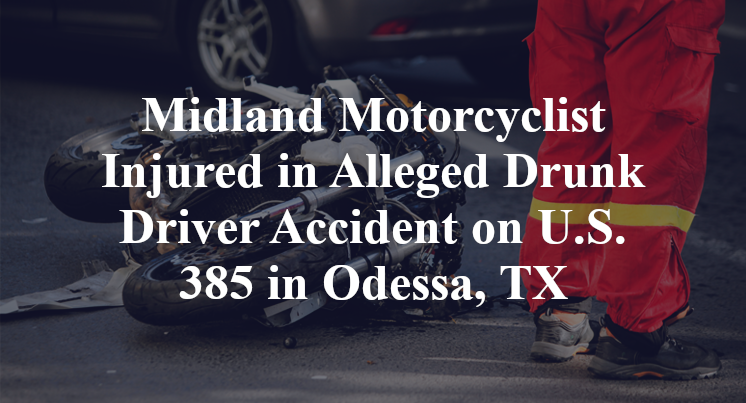
The intersection is controlled by a traffic light. Officials indicate that a northbound Jeep Liberty—occupied by a 34-year-old man who had allegedly been under the influence at the time—entered the intersection at an unsafe time, failing to heed the light indicated by the traffic signal. A collision consequently occurred between the Jeep and the Kawasaki.
The Midland man reportedly sustained serious injuries as a result of the wreck. It does not appear that anyone else was hurt. Additional details pertaining to this incident—including the identity of the victim—are not available at this point in time. The investigation is currently ongoing.
Commentary by Attorney Michael Grossman
When I read about incidents like this one, what stands out to me isn’t just what happened, but what’s missing from the conversation—especially when a serious crash occurs in the early morning hours and alcohol is alleged to be involved. It’s easy to focus on the driver accused of being intoxicated, but experience has taught me that the full picture often includes others who may have played a role, particularly those who served alcohol to someone who was already clearly impaired.
If reports are accurate and the driver was indeed under the influence at the time of the crash, one of the most important but overlooked questions is: Where was he drinking beforehand? That’s the kind of question dram shop law is built to answer. In Texas, businesses that sell alcohol have a legal duty not to overserve obviously intoxicated patrons. If an establishment ignored those safeguards and continued to serve someone who was clearly impaired, the law may hold them accountable for the harm that followed—including injuries to innocent people on the road.
This isn’t about shifting blame; it’s about understanding every link in the chain that leads to these preventable events. Whether it’s a bar, restaurant, or other licensed provider, the decision to serve alcohol to someone who shouldn’t be drinking has real-world consequences. And for victims and their families, knowing all the facts—not just about the driver, but about who may have enabled his behavior—can be an important part of finding answers and accountability.
Most people don’t realize it, but dram shop law is designed precisely for situations like this—where someone was hurt due to impaired driving, and there’s reason to believe the alcohol service itself may have crossed a legal line. In my experience, that part of the story often goes uninvestigated unless someone knows to ask.
Three key points worth considering:
- Alcohol providers can be held responsible if they serve a person who is obviously intoxicated and that decision contributes to a crash.
- Many investigations focus solely on the driver, but Texas law allows injured parties to explore whether a business may have played a role.
- The law offers tools that many people don’t know they can use—but they exist to help uncover the full story and pursue meaningful accountability.

 call us
  Email Us
  Text us