
Enterprise, TX — June 15, 2025, Maxsim Gashin was killed and one person was injured in a motorcycle versus car accident at 9:30 p.m. along U.S. Highway 84.
According to authorities, 22-year-old Maxsim Gashin was traveling on an eastbound Honda motorcycle on U.S. Highway 84 in the vicinity west of Caledonia when the accident took place.
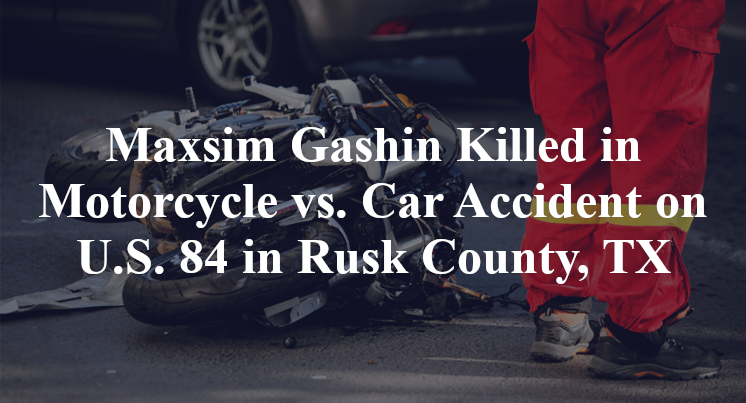
Officials indicate that, for as yet unknown reasons, a westbound Pontiac G6 attempted to pass another vehicle in a no-passing zone. A collision consequently took place between the Pontiac and the motorcycle. The Pontiac reportedly caught on fire over the course of the accident.
Gashin sustained fatal injuries due to the wreck, reports state, while the 17-year-old boy who had been behind the wheel of the Pontiac suffered serious injuries.
Additional details pertaining to this incident are not available at this point in time. The investigation is currently ongoing.
Commentary by Attorney Michael Grossman
Crashes between motorcycles and cars often unfold in just a second—but what happens in that second can be the difference between life and death. When passing maneuvers turn tragic, especially in no-passing zones, the first reaction is usually to blame the driver. But focusing on fault alone risks missing other critical factors that demand attention.
1. Did the authorities thoroughly investigate the crash?
A head-on collision involving a no-passing maneuver should trigger a full-scale investigation. Did officers document tire marks, vehicle angles, and the precise location of impact? Was a scene reconstruction completed to verify how long each driver had to react—or if they had time at all? These details can’t be left to guesswork. It’s also worth asking whether the investigating agency had access to the tools and expertise needed to analyze this kind of high-speed, multi-vehicle collision involving a motorcycle. Sometimes they do. Sometimes they don’t.
2. Has anyone looked into the possibility that a vehicle defect caused the crash?
With such a reckless maneuver reported, people might assume the car’s driver was solely at fault. But it’s still critical to ask—was there a mechanical issue that contributed? Could the Pontiac’s steering, brakes, or throttle have malfunctioned during the passing attempt? A fire breaking out post-collision also raises questions about the car’s condition before impact. Without a full inspection, it’s impossible to know whether the driver lost control because of his decisions—or because of his vehicle.
3. Has all the electronic data relating to the crash been collected?
Both vehicles might hold key digital clues. Did the Pontiac show sudden acceleration or erratic steering before the crash? Did the motorcycle’s onboard systems capture speed or throttle inputs? Were either of the drivers using phones or connected devices at the time? Data from the car, the bike, and possibly nearby dashcams or surveillance footage could fill in gaps that no witness can fully explain.
At the heart of this is a simple truth: people deserve real answers, especially when a young life ends in a crash that never should have happened. And those answers won’t come without asking the questions that most people skip.
Takeaways:
- Head-on crashes involving passing should always trigger a full scene reconstruction.
- Even when driver error seems obvious, vehicle defects still need to be ruled out.
- Data from both vehicles—and any nearby sources—can clarify what really happened.

 call us
  Email Us
  Text us