
Update (April 22, 2025): Authorities have identified the man who was killed in this accident as John David Ochoa, 67.
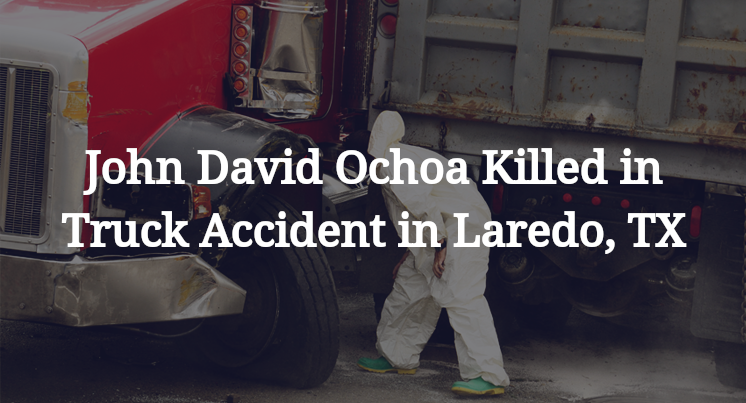
Laredo, TX — April 20, 2025, one person was killed in a truck accident at about 4:25 p.m. on northbound Interstate 35 near exit 12B.
Authorities said a semi-truck crashed into the passenger side of a car.
The driver, a 67-year-old man whose name has not been made public at this time, was pronounced dead after being transported to a local hospital, according to authorities.
No other injuries were reported.
Authorities have not released any additional information about the Webb County crash at this point. The accident is still under investigation.
Commentary by Attorney Michael Grossman
When a semi-truck collides with the passenger side of a car, the first legal question is straightforward but critical: Why did the truck strike the side of the car, and did the driver have a reasonable opportunity to prevent that from happening? In this crash, the reported facts suggest a side-impact scenario: a type of crash that’s especially dangerous for those in smaller vehicles, and one where fault often falls on the driver making the lateral movement.
Without knowing the exact position of the vehicles — whether the car was merging, changing lanes or simply traveling in its own lane when it was hit — it’s too early to assign blame. But from a legal perspective, the responsibility still begins with the truck driver’s duty to maintain lane discipline and a safe lookout. Commercial drivers are trained to account for blind spots and to take extra care during lane changes, merges and passing maneuvers. If the truck struck the side of the car during one of these actions, investigators will need to determine whether the move was safe and legal.
On highways like I-35, especially in an area as heavily trafficked as Laredo, space can be tight and decisions must be made quickly, but not carelessly. If the car was already occupying the lane and the truck driver merged without properly checking mirrors or blind spots, that would represent a clear failure to exercise the level of caution the law requires of commercial operators.
Evidence that will help clarify the situation includes the truck’s engine control module data, which can show speed, throttle input, and any braking activity before the impact. Dashcam footage from the truck, if available, could offer a clearer picture of how the collision occurred. Investigators should also look into whether either vehicle was making a lane change, reacting to slowed traffic or responding to an obstruction in the road.
Another area of inquiry is the position and movement of both vehicles relative to the exit ramp. Exits are common sites of merging and lane-weaving behavior. If the crash occurred near a ramp merge or diverge point, the timeline of each vehicle’s movement becomes even more important.
While it’s still early in the investigation, what’s already clear is that a man lost his life in a crash that likely stemmed from one vehicle entering the path of another. The question now is whether that movement was made carefully, with full awareness of nearby traffic, or whether it was the kind of rushed or inattentive decision that leads to irreversible consequences.
That’s why commercial drivers are held to a higher standard, because when something goes wrong, they’re often the largest and most dangerous object on the road. And when a crash like this happens, the investigation shouldn’t just look at how it occurred, but whether it could have, and should have, been avoided altogether.

 call us
  Email Us
  Text us