
Carthage, MO — February 24, 2025, One person was killed and one was injured following an 18-wheeler accident that occurred around 8:49 A.M. on MO 171.
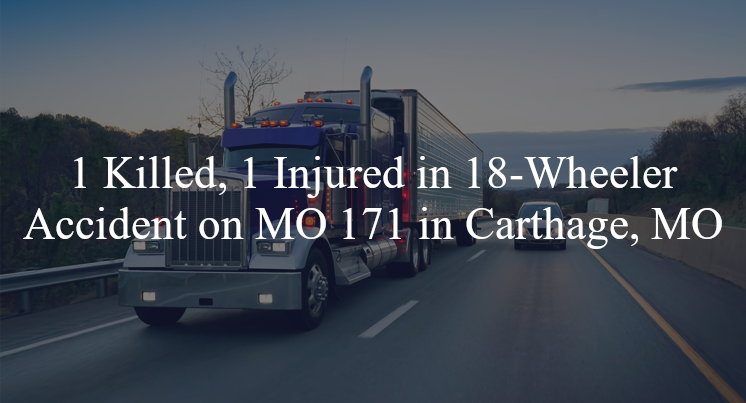
An investigation is underway into a car accident that left one person dead and injured another during the morning hours of February 24th. According to official reports, a Mercedes C350 was travelling on MO 171 in the southbound lanes, when for unknown reasons an 18-wheeler struck the rear of the Mercedes resulting in an accident.
When first responders arrived on the scene, they found that the Mercedes driver had sustained critical injuries and the passenger sustained serious injuries and they were transported to the hospital for treatment where the driver later succumbed to their injuries. At this time there has been no further information released from the accident, including the status of the passenger’s injuries and the identities of those involved, however this remains an ongoing investigation and more details may be released by authorities in the future.
Commentary by Attorney Michael Grossman
When I read about a crash like this, my first thought is that I hope investigators can provide clear answers for the loved ones of those involved. A collision involving an 18-wheeler striking the rear of a passenger vehicle raises serious concerns about visibility, following distance, and whether the crash could have been prevented. While initial reports confirm what happened, they don’t necessarily explain why it happened. To truly understand the cause of the crash, three critical questions must be asked.
First, have authorities thoroughly investigated the crash? Law enforcement will typically document the scene, assess road conditions, and analyze factors such as traffic flow, speed limits, and visibility. However, deeper analysis is often necessary. Was the Mercedes stopped or slowing when it was hit? Was the 18-wheeler following too closely, or was there an obstruction that prevented the driver from seeing the vehicle in time? Were road conditions—such as poor lighting, weather, or construction—contributing factors? A full accident reconstruction could help determine the sequence of events leading up to the impact.
Second, has anyone looked into the possibility of a vehicle defect? Rear-end collisions often seem straightforward, but mechanical failures—such as brake malfunctions or acceleration issues—could have played a role. Additionally, commercial trucks are equipped with advanced safety systems designed to prevent these types of crashes, such as collision avoidance technology and automatic braking—did these systems function properly? If either vehicle experienced a mechanical failure, it’s critical that investigators preserve and examine them before repairs or scrapping occur, as key evidence could be lost.
Third, has all electronic data relating to the crash been collected? Most commercial trucks are equipped with electronic logging devices (ELDs) and event data recorders (EDRs), which capture valuable information such as speed, braking efforts, and whether the driver attempted to stop before impact. Similarly, the Mercedes’ electronic control module (ECM) may provide key insights into its speed and braking attempts. Additionally, nearby traffic cameras, dashcams, or surveillance footage could provide further clarity on what happened. If investigators don’t secure this evidence quickly, it may be lost, making it much harder to determine exactly what led to the crash.
At the end of the day, the families of those involved deserve clear answers. If the official investigation leaves any gaps, independent experts may be needed to ensure that every possible factor is considered. Whether the cause was environmental, mechanical, or something else entirely, the community owes it to those affected to make sure all available evidence is carefully examined.

 call us
  Email Us
  Text us