

Hanover, PA — October 29, 2025, one person was injured due to a truck accident sometime in the afternoon along Eisenhower Drive.
According to authorities, the accident occurred in the westbound lanes of Eisenhower Drive in the vicinity west of Georg Street.
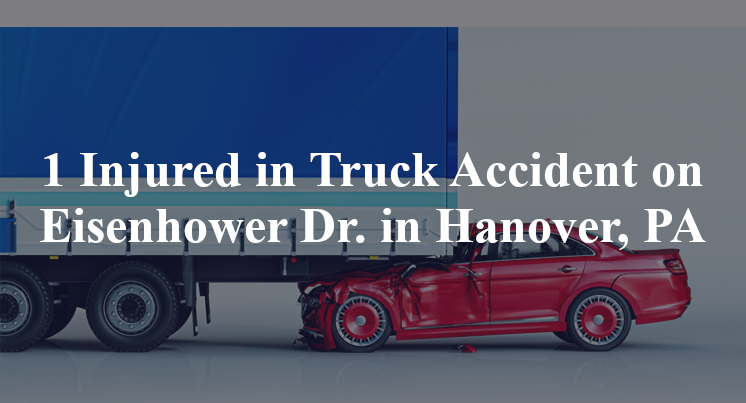
Officials indicate that, for as yet unknown reasons, a collision took place between the front-end of a Ford Focus and the rear-end of an 18-wheeler’s flat bed trailer. The person who had been behind the wheel of the sedan reportedly sustained injuries of unknown severity; they were flown to an area medical facility in order to receive necessary treatment. Additional details pertaining to this incident—including the identity of the victim—are not available at this point in time. The investigation is currently ongoing.
Commentary by Attorney Michael Grossman
When a passenger car strikes the rear end of a flatbed trailer, most people jump to the conclusion that the driver of the car was simply following too closely. But in my experience, that’s not always the whole story—especially when the trailer is difficult to see, or its movements weren’t clearly communicated to others on the road.
The fact that the impact involved a flatbed trailer raises important questions about visibility. Was the trailer equipped with reflective markings, working taillights, and a clean, visible underride guard? Was it carrying any load that may have extended beyond the bed—or was it empty, making it harder to see, particularly in shadowed or backlit conditions? Flatbeds that aren’t properly marked or lit can be nearly invisible until it’s too late.
It’s also worth asking whether the truck had stopped abruptly, was backing, or had partially entered traffic from a driveway or side street. If the trailer was moving slowly or was not fully within a lane of travel, that could drastically reduce a following driver’s time to react—even if they were being reasonably attentive.
And while the front-to-rear nature of the impact does put some investigative focus on the sedan driver’s actions, fault in these types of crashes is not always one-sided. Investigators should examine dash cam footage, truck ECM data, and crash scene measurements to determine the trailer’s speed and position at the time of impact.
Even basic questions like whether the truck had working brake lights or was parked legally can make the difference between a case of simple inattention and one involving negligent operation of a commercial vehicle.
Key Takeaways:
- Rear-end collisions involving flatbed trailers require careful analysis of trailer visibility and lighting.
- Investigators must determine whether the trailer was stopped, moving slowly, or positioned in an unexpected or unsafe manner.
- Reflective markings, brake lights, and load overhang are all relevant to assessing whether the trailer was reasonably visible.
- Dash cam footage and ECM data can clarify whether the impact was truly unavoidable or the result of poor communication or lighting.
- Liability may rest with either party—or both—depending on whether proper precautions were taken by the commercial driver.
 call us
 Email Us
 Text us