

Montgomery, NY — October 21, 2025, Kevin Cantwell was killed due to a truck accident just after 3:00 p.m. along Interstate Highway 84.
According to authorities, 71-year-old Kevin Cantweel was traveling in a westbound Mercedes-Benz Sprinter van on I-84 in the vicinity east of State Highway 208 when the accident took place.
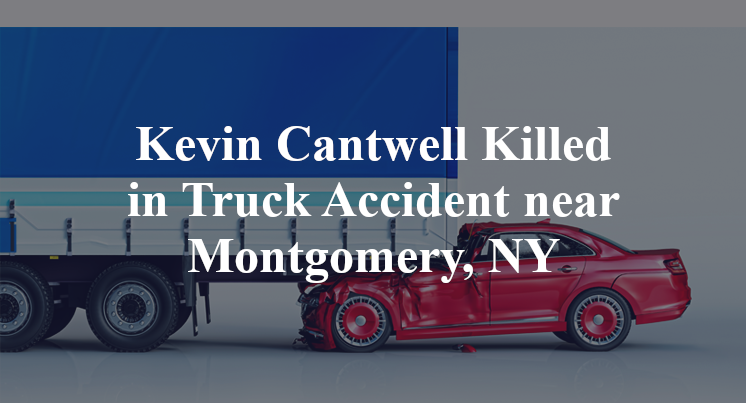
Traffic in the area at the time was reportedly slowing. Officials indicate that, for as yet unknown reasons, the van failed to appropriately control its speed; a collision consequently occurred between the front-end of the van and the rear-end of an 18-wheeler’s trailer.
Cantwell reportedly sustained fatal injuries due to the wreck and was declared deceased at the scene. It does not appear that anyone else was hurt. Additional details pertaining to this incident are not available at this point in time. The investigation is currently ongoing.
Commentary by Attorney Michael Grossman
When a smaller commercial vehicle like a Sprinter van rear-ends an 18-wheeler in slowing traffic, it’s tempting to assume the fault lies entirely with the trailing driver. But in my experience, that conclusion is often premature—especially when the result is fatal and the driver who could explain what happened is no longer alive.
The key question isn’t just why didn’t the van stop in time, but also what was the 18-wheeler doing in the moments leading up to the crash? Was it slowing gradually, or did it stop suddenly? Was the van driver distracted—or was there insufficient time to react? These questions can’t be answered without hard evidence like engine control module (ECM) data, dash cam footage, and, in some cases, traffic camera recordings.
Another factor that must be examined is conspicuity—that is, how visible the trailer was. If the trailer’s taillights were malfunctioning, or if it lacked proper reflective markings, then even a cautious driver might not have realized traffic was stopping until it was too late. I’ve worked cases where poorly maintained lighting or dirty reflective tape turned out to be the deciding issue—not the speed or attentiveness of the driver behind.
There’s also the matter of stopping distance. Sprinter vans, depending on how they’re loaded, don’t handle like passenger cars. If the van was carrying cargo, that would affect braking distance—and it also raises questions about load securement and vehicle condition. If brakes weren’t properly maintained, or if the cargo shifted under braking, that could have contributed directly to the inability to stop.
Ultimately, rear-end crashes are not always one-sided. The law allows for comparative fault, and that’s especially relevant when commercial vehicles are involved. Determining who’s legally responsible requires more than the position of the vehicles after the crash—it requires understanding how both were being operated in the moments before.
Key Takeaways:
- The core issue is why the van was unable to stop in time—and whether the 18-wheeler’s actions contributed to that failure.
- ECM data, dash cam footage, and trailer lighting/markings should all be closely reviewed.
- Vehicle condition and load balance may have affected the van’s braking performance.
- Fault may not rest solely with the rear vehicle if visibility or sudden stops played a role.
- Comparative fault principles require a full examination of both drivers’ behavior—not just assumptions based on impact position.
 call us
 Email Us
 Text us