

Vail Pass, CO —June 18, 2025, Two people were injured following an 18-wheeler accident that occurred at around 2:15 P.M. on Interstate 70.
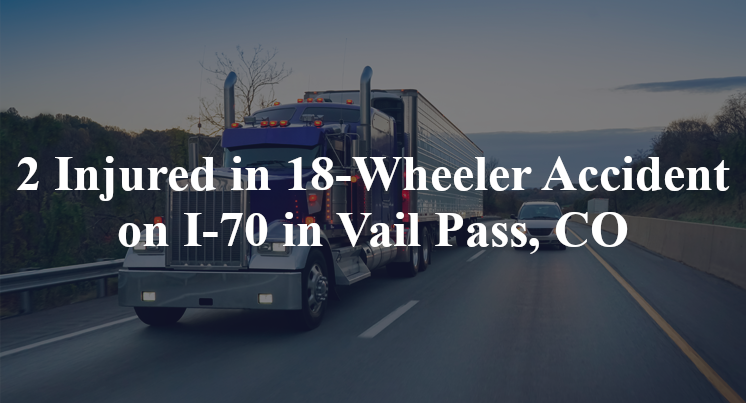
According to official reports, a 7-vehicle-accident occurred along the westbound lanes of Interstate 70 near exit 195 which involved an 18-wheeler and a box truck, though the cause of the crash is still being determined.
When first responders arrive don the scene they found that two people were seriously injured and transported them to the hospital. The identities of the injured have not been released and authorities have not released an update on the investigation.
Commentary by Attorney Michael Grossman
Any time a crash involves seven vehicles—including an 18-wheeler and a box truck—it’s safe to say something went seriously wrong. But until investigators release more details, the most important questions remain unanswered: How did this happen? And could it have been prevented?
At this point, we know that the crash happened in the westbound lanes of I-70 and that at least two people were seriously injured. Beyond that, we’re left with more questions than answers.
Multi-Vehicle Crashes Are Rarely Random
In my experience, large pileups like this are usually set in motion by a single mistake—whether it’s a sudden stop, unsafe lane change, or a commercial vehicle following too closely. But once that chain reaction starts, it becomes harder and harder for drivers further back to avoid getting pulled into the wreck.
That’s why the sequence of impacts matters. Did the 18-wheeler strike stopped traffic? Did the box truck attempt a sudden maneuver? Was visibility poor or traffic already slowing? Each of these possibilities points toward a different cause, and each affects who may ultimately be held accountable.
Commercial Vehicles Deserve Special Attention
When a crash involves both an 18-wheeler and a box truck, it’s important to remember that these vehicles are governed by stricter safety rules than passenger cars. That includes rules about speed, following distance, driver hours, and maintenance.
Electronic logging devices, engine control modules, and dash cameras—if preserved—can provide an objective record of what happened before and during the crash. These tools can show whether a driver was speeding, distracted, or driving longer than legally allowed.
In one case I handled, it turned out a truck driver had been behind the wheel for well over his allowed hours, and his reaction time slowed just enough to cause a rear-end collision that spiraled into a multi-car pileup. That detail wouldn’t have come out if we hadn’t secured and reviewed the digital records.
Too Early to Assign Blame—But Not Too Early to Investigate
Right now, we don’t know who caused the crash—or even whether a single driver is to blame. But that doesn’t mean investigators should wait to gather evidence. The longer they delay, the greater the risk that key data is lost or destroyed.
Key Takeaways
- The cause of the 7-vehicle crash on I-70 has not yet been determined, but it likely began with a single event or mistake.
- Commercial vehicles like 18-wheelers and box trucks carry electronic data that can help reconstruct the crash.
- Understanding the order of impacts and vehicle behavior is key to figuring out who may be responsible.
- Multi-vehicle crashes often involve overlapping mistakes by more than one party.
- Early investigation is crucial to preserving the evidence needed to get to the truth.
 call us
 Email Us
 Text us