

Authorities said a semi-truck and a car were involved in a crash on the ramp exiting southbound U.S. 61.
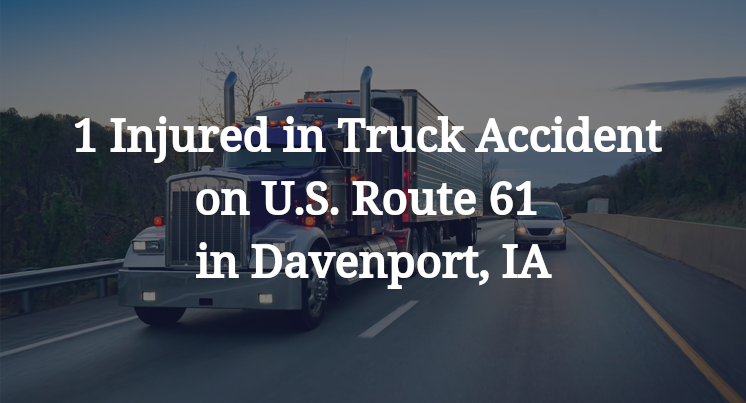
One person was injured in the crash, authorities said, but it is not clear how that person was involved in the accident.
Authorities have not released any additional information about the Scott County crash at this time. The accident is still being investigated.
Commentary by Attorney Michael Grossman
When a crash happens between a semi-truck and a smaller vehicle, most people want to know: How exactly did this happen? Who’s responsible? And in this case, why is there so little information available?
From what’s been reported, a crash occurred on the ramp from southbound U.S. 61 to eastbound I-80. A car and a semi-truck were involved, and at least one person was injured. But beyond those basic facts, not much else has been shared. We don’t yet know whether the truck rear-ended the car, sideswiped it or whether one vehicle was stopped or disabled before the other came along. Each of those scenarios would raise different legal and factual questions.
That lack of detail leaves a lot of critical questions unanswered. For instance:
- What was the truck doing at the time of the crash? Was it trying to merge, navigating a curve too quickly or dealing with a mechanical issue?
- Was the driver distracted or fatigued? This is where things like cell phone records, logbooks and in-cab camera footage become essential.
- What does the truck’s black box (ECM) say? It can tell us the truck’s speed, brake application and throttle position in the moments leading up to the crash.
One thing I’ve learned over the years is that the truth of a crash rarely lives in the police report alone. That’s not a dig at law enforcement; it’s just that crash scene investigations often miss what’s going on behind the scenes: hiring practices, maintenance logs and driver history. I’ve handled cases where trucking companies hired drivers with questionable records or skipped key steps in their safety training. When that happens, a crash isn’t just a one-off; it’s the predictable outcome of deeper problems.
At this point, it’s not even clear whether the person who was hurt was the driver of the car, the truck or a passenger in either vehicle. That’s a critical piece of information, because it can help point toward which vehicle may have been at fault, or whether both played a role.
Until those facts are pinned down with hard evidence, we can’t say who should be held accountable. But I can say this: truck crashes on highway ramps deserve more scrutiny than they typically get. These aren’t open highways with clear lines of sight. They’re tight curves with merging traffic, blind spots and elevation changes. That makes careful driving, and careful investigation, all the more important.
Key Takeaways
- It’s unclear how the crash occurred or which vehicle may have caused it. Details remain vague.
- Ramp crashes often involve complex factors like speed, merging errors or visibility issues.
- Evidence like dash cam footage, ECM data and cell phone records is key to finding the truth.
- Investigations should look beyond the crash scene, including driver history and company practices.
- Full accountability requires full information, and that starts with asking the right questions.
 call us
 Email Us
 Text us